
Moving from Denial to Discovery: The journey from anosognosia to adaptation
Patients discuss: altered awareness of the body; developing intellectual awareness of neglect; impact of neglect on quality of life; strategies to reduce neglect.
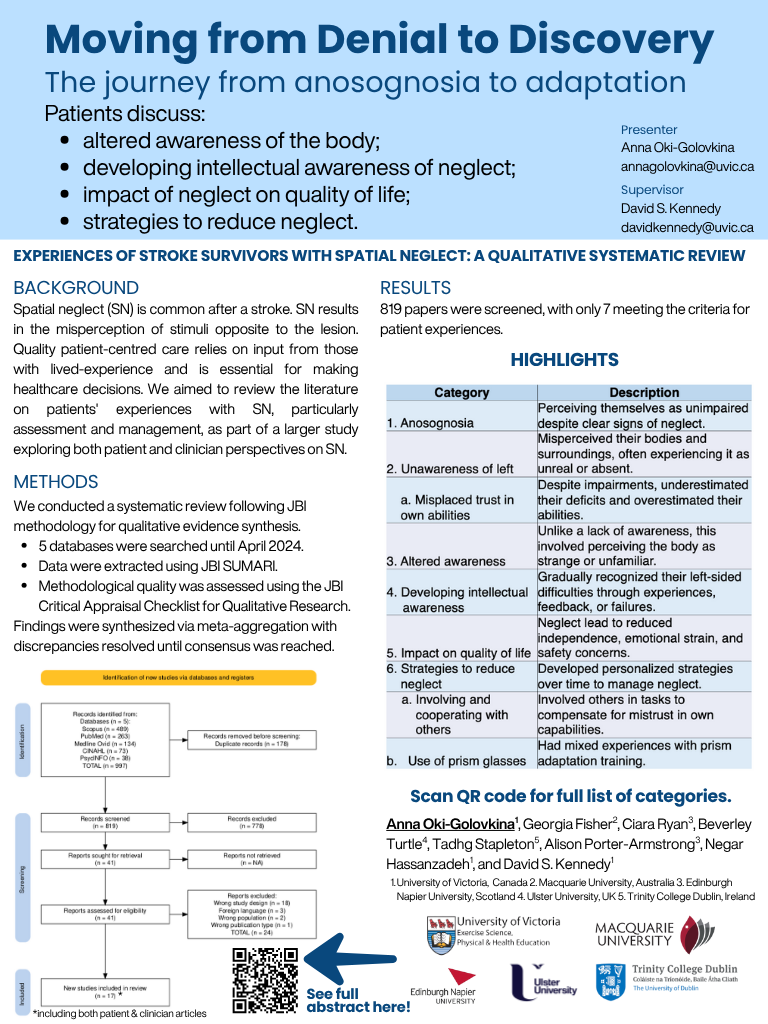
EXPERIENCES OF STROKE SURVIVORS WITH SPATIAL NEGLECT: A QUALITATIVE SYSTEMATIC REVIEW*
Anna Oki-Golovkina, Georgia Fisher, Ciara Ryan, Beverley Turtle, Tadhg Stapleton, Alison Porter-Armstrong, Negar Hassanzadeh, and David S. Kennedy
Background: Spatial neglect (SN) is common after a stroke. SN results in the misperception of stimuli opposite to the lesion. Quality patient-centred care relies on input from those with lived-experience and is essential for making healthcare decisions. We aimed to review the literature on patients’ experiences with SN, particularly assessment and management, as part of a larger study exploring both patient and clinician perspectives on SN.
Methods: We conducted a systematic review following JBI methodology for qualitative evidence synthesis. Five databases were searched until April 2024 using terms related to stroke, spatial neglect, and patient/clinician experience. Four independent reviewers screened titles and abstracts, and two reviewers screened full texts. Data were extracted using JBI SUMARI and methodological quality was assessed using the JBI Critical Appraisal Checklist for Qualitative Research. Findings were synthesized via meta-aggregation with discrepancies resolved through discussion until consensus was reached.
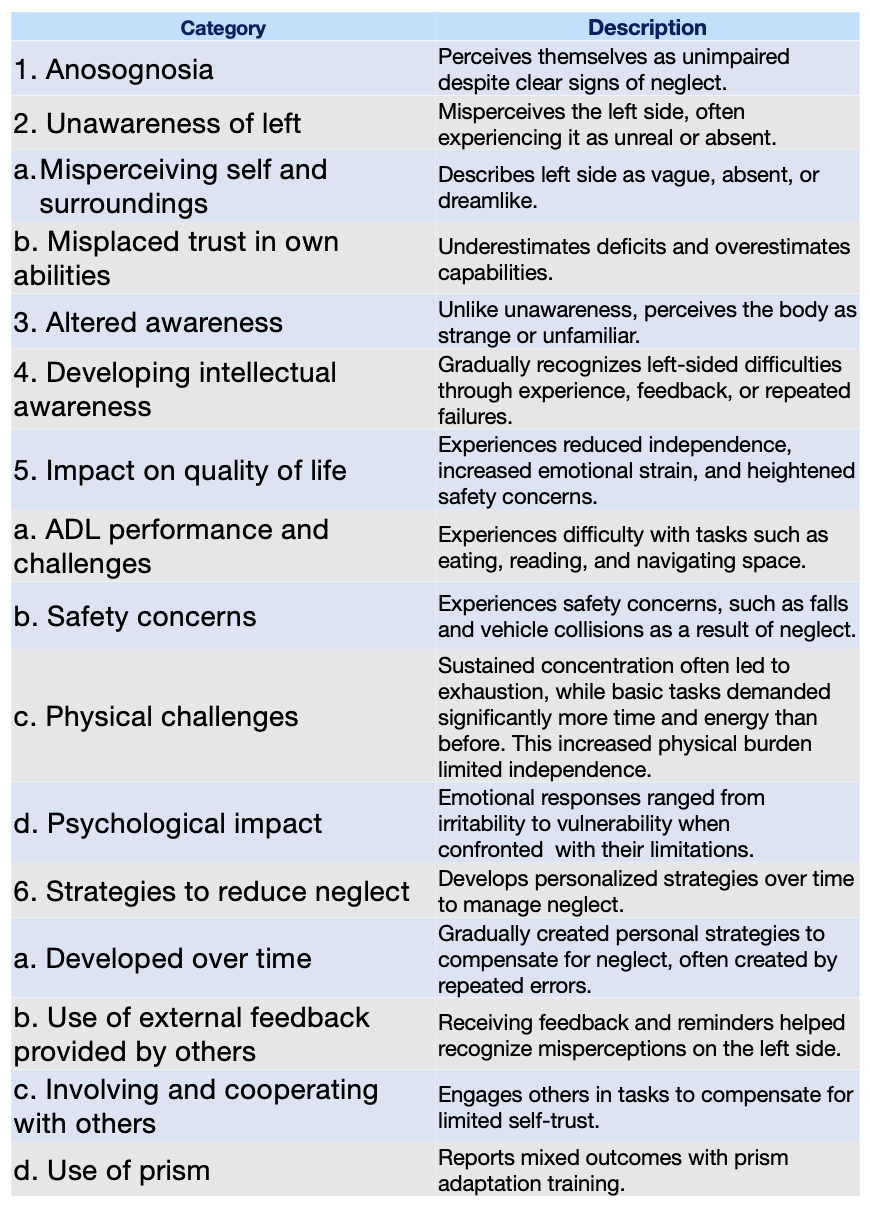
Results: 819 papers were initially screened, with only seven meeting the inclusion/exclusion criteria for patient experiences. Six categories emerged from the synthesis of the included studies: 1) anosognosia for neglect; 2) unawareness of neglect; 3) altered awareness of the body; 4) developing intellectual awareness of neglect; 5) impact of neglect on quality of life; 6) strategies to reduce neglect.
Conclusion: Unsurprisingly, patients with SN experienced misperception of the left world, often without realizing the extent of their impairments. Significantly, no results linked assessment of neglect to awareness of the condition or management strategies, highlighting a critical gap between clinical assessment practices and patients’ lived experiences.
*This systematic review has been divided into two abstracts for the World Stroke Congress 2025: Patients’ experience and clinicians’ experience.
Visit link to view The Gap Between Knowing and Doing: Clinicians’ Experience with Spatial Neglect.
Visit nprlab.uvic.ca for updates from the Neurological Pain and Rehabilitation Lab at the University of Victoria.